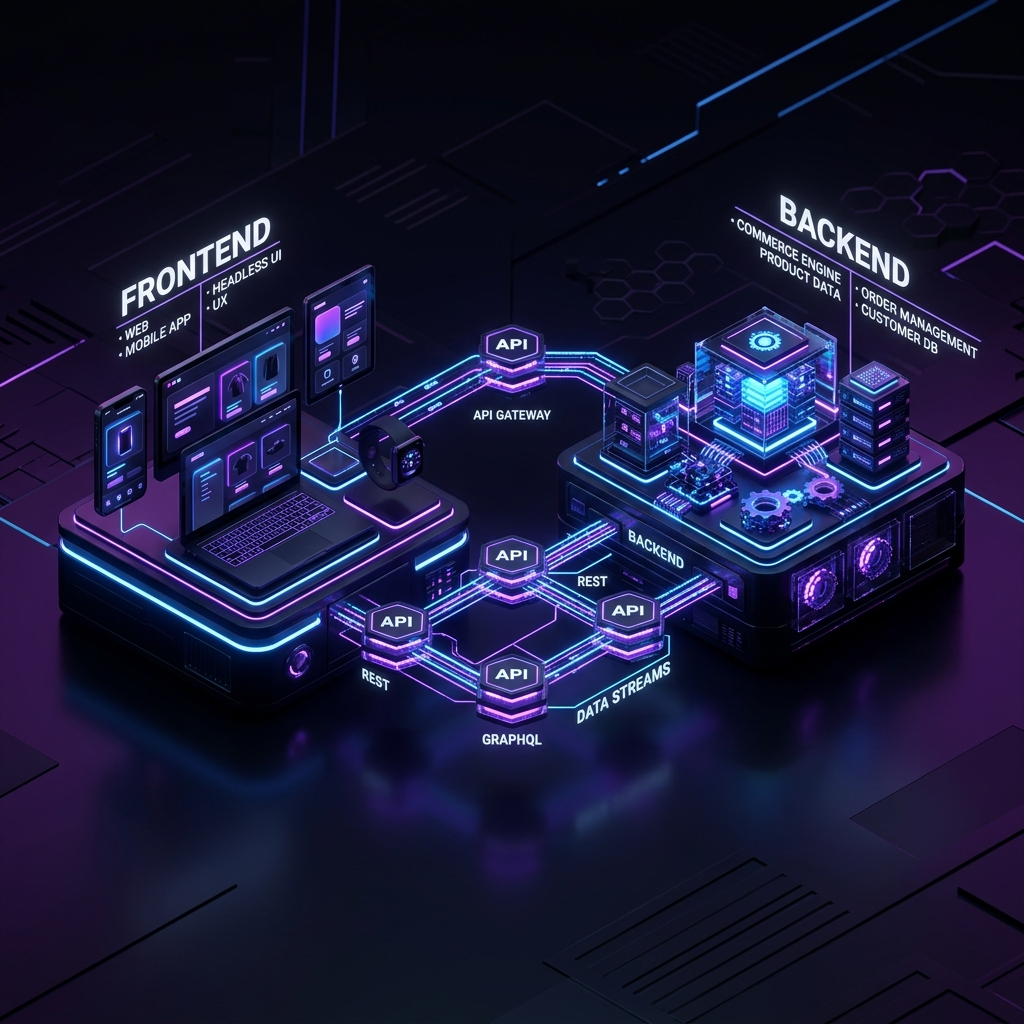
Migrating a monolithic online store to a headless architecture is the ultimate double-edged sword. On one hand, decoupling your frontend from your backend unlocks blazing fast load times and limitless UI/UX potential. On the other hand, if your technical SEO team isn't involved from day one, a headless migration can absolutely decimate your Google rankings. In 2026, protecting your organic traffic requires a strict "Zero-Regression" migration strategy.
The Danger of Client-Side Rendering (CSR)
The most common mistake developers make when building headless e-commerce storefronts (using React, Vue, or similar frameworks) is relying on Client-Side Rendering. If Googlebot crawls your page and only sees an empty JavaScript shell, it won't index your products. To maintain headless e-commerce SEO best practices, you must implement Server-Side Rendering (SSR) or Incremental Static Regeneration (ISR). This guarantees that search engines immediately receive fully rendered HTML containing all your crucial structured data and meta tags.
The Rise of Hybrid Headless CMS
A pure headless setup often creates a severe bottleneck for marketing teams, forcing them to submit IT tickets just to change a meta description or update an H1 tag. This is why the industry is rapidly shifting toward a hybrid headless CMS SEO approach. These platforms provide the performance of a decoupled API architecture while retaining a visual editor, empowering non-technical teams to execute on-page SEO without touching the codebase.
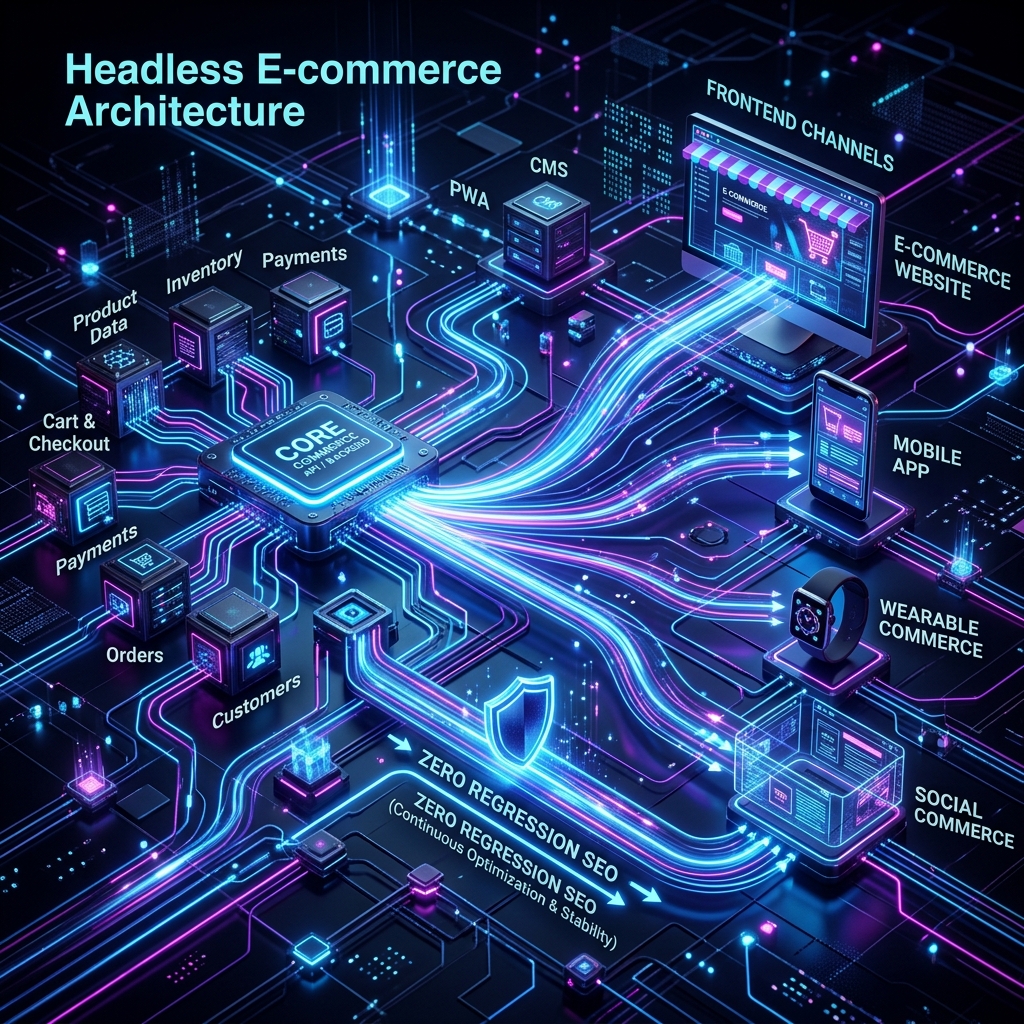
Executing a Zero-Regression Migration Strategy
To achieve a zero-regression migration (meaning you lose zero organic traffic during the switch), you must follow a rigid protocol:
- 1:1 Redirect Mapping: Every single legacy URL must be mapped to its new headless equivalent using a 301 permanent redirect. Missing even 5% of your product catalog in the redirect map can trigger a massive rankings drop.
- Structured Data API Validation: Your new frontend must dynamically generate Schema.org JSON-LD for products, reviews, and breadcrumbs. Do not assume your new frontend framework handles this natively.
- Parity Crawling: Before going live, use a staging environment to run a deep crawl of both the old and new sites. Compare the meta tags, canonicals, and H-tag structures to ensure exact parity.
Core Web Vitals as a Ranking Lever
When executed correctly, a headless migration becomes a massive SEO advantage. By stripping away the bloated plugins of traditional platforms, you can achieve near-perfect Core Web Vitals scores. Since Google heavily weighs page speed and interactivity, a lightning-fast headless site will naturally outrank slower monolithic competitors.
Ready to start your headless migration? Contact Ecotrustia Solutions.
Check out our Portfolio for prior e-commerce architecture work.